
Butts Up
- Gayle

- Nov 12, 2022
- 2 min read

I live near a slough. This may not be a selling point for realtors but it is for me. As a birder, I am always on the hunt with binoculars and a field guide in hand. Wetlands are a perfect habitat for a variety of birds. The swampy reeds around the slough are perfect for noisy little marsh wrens. The red-winged blackbirds chime in with their two-cents as they sway on the prairie grasses. Not to be outdone, yellow-headed blackbirds zoom by as if to say, "Here we are. Don't you love our fancy caps?" Barn swallows show off their acrobatic maneuvers, chasing the abundance of insects hovering near the water. Occasionally a belted kingfisher makes a dramatic dive for an underwater treasure. Plump gray pigeons hold court en mass upon a utility wire, murmuring away. I am sure they have much to gossip about.
I am curious about all the birds but one of my primary reasons for tromping through a boggy area is the water birds. I am woefully unskilled at identifying them. Sure, I can recognize a Canadian goose and a male mallard. If a pelican came strutting by, I suppose I could get that one too. But, it starts to get murky after that. The less flashy females of many duck species are especially ubiquitous. Their feet and underbelly are usually submerged so many identifying features are not visible.
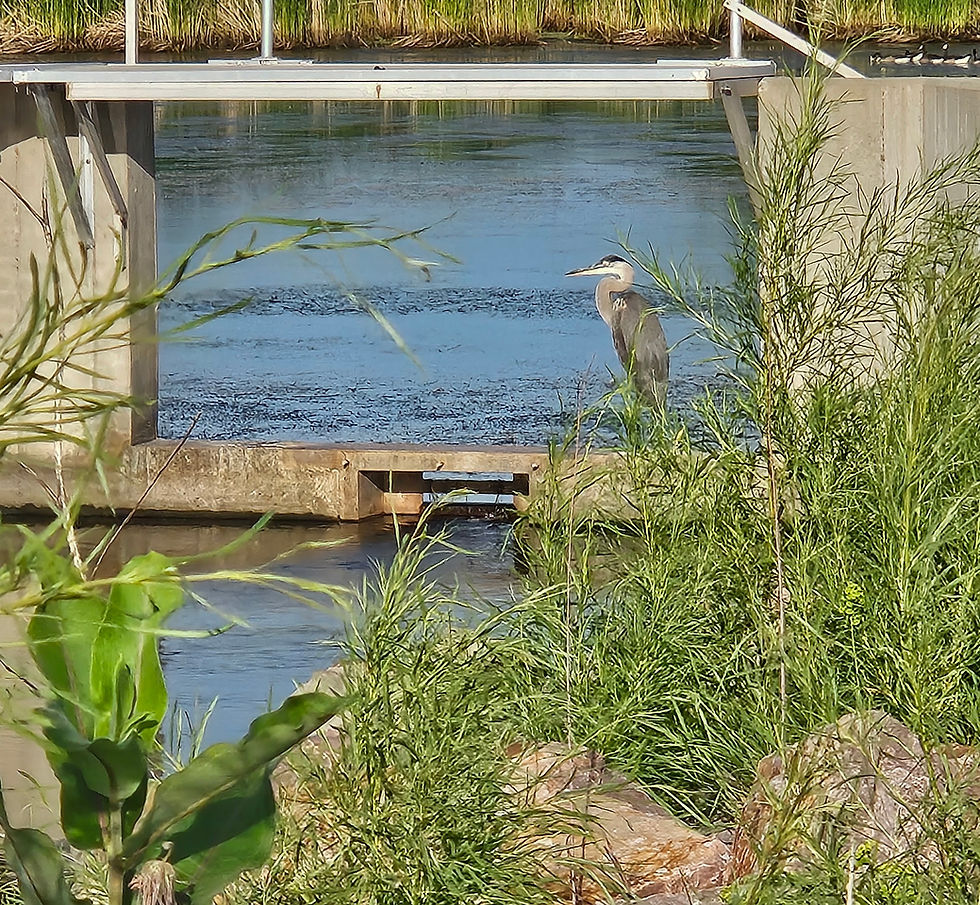
Most of the water birds I see are classified as dabblers, meaning they sit high on the water and tip their heads underwater searching for food. Their bottoms stick straight up in the air as they nosh on aquatic flora and fauna. So, not only am I trying to discern above-water bird features, I am looking at a lot of bird butts, merrily bobbing along. It can look a bit comical so I do not mind but it does take a little more patience waiting for them to come back up for air. So far this year I have been able to enjoy mallards, geese, green-winged teals and wood ducks. Add to the mix are the shorebirds. The stately great blue heron gracefully moves its stilt legs in search of tasty fish. Its smaller cousin, the green heron, stands with hunched shoulders awaiting its next strike for food.
One of my favorite shorebirds is the killdeer. Its call can be heard for blocks and I am often aware of its presence before I shut the engine off on my vehicle. It skitters frantically around on its thin little stick legs, worrying that its territory will be invaded. Occasionally, I see a couple of greater yellowlegs joining the fun with their piercing bills, white rumps and, of course, yellow legs.
"I'm going to the slough," may have an odd ring to it, but at my house it is a common phrase. I feel lucky to have one so close to my house. I consider it a privilege to be greeted by a bunch of bobbing feather butts first thing in the morning. Along with a hot cup of coffee, it is a show that does not disappoint. No tickets required.


Comments